
“You interviewed Yousuf Karsh? Wow!” That was the response from Betty Hagopian, a fellow Harvard undergraduate student, fifty-five years ago. Betty is Armenian-American, and thus more aware than most of the fame of her ethnic confrere. I was a member of the news department of the Harvard student radio station WHRB, and I produced a program that involved interviewing famous people.
My Interview with Yousuf Karsh
I heard that Karsh was in Boston for an exhibit of his photographs. This was in 1969, when he was at the height of his fame. He consented to do the interview because, as he told me, he believed Harvard undergraduates would go on to do great things.
There are no extant records of the interview, but I do remember three things about it. First, Karsh told me his classic anecdote about his iconic 1941 photo of Winston Churchill. The sitting was arranged for a private office just after Churchill made an inspirational speech to the Canadian Parliament. Churchill lit up his usual cigar, but Karsh didn’t want it to be part of the picture, so as respectfully as possible, snatched it from Churchill’s mouth. Churchill’s indignant and belligerent glare at Karsh came to represent his defiance of Nazi Germany. Of course, Karsh had told this story hundreds of times; nonetheless he retold it with energy and animation to this undergraduate interviewer.
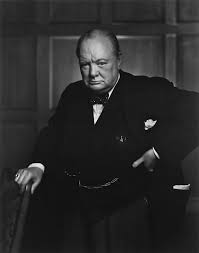
A second indication that Karsh took me seriously is how he dressed. He wore a fine dark suit, crisp white shirt, and silver tie. In effect, he was arrayed in the black-and-white colour palette of a Karsh portrait. I would like to think I wore whatever coat and tie I had at the time, but in the activist Sixties, I very much doubt it.
Finally, I had some skepticism about Karsh’s intellectual project. Karsh was a believer in the great person (though mainly male persons) theory of history and set out to photograph the great and the good. I was studying social theory and believed that economic and social forces shaped history. Nonetheless, I hope that, just as Karsh was treating me respectfully, I treated him respectfully in my interview and the subsequent program I aired.
Melissa Rombout’s Retrospective
What brings to mind this episode that happened over a half-century ago is the publication of Melissa Rombout’s new retrospective Yousuf Karsh: Life and Work by the Art Canada Institute, which has made it available online in its entirety. It will soon be available in hard copy. Rombout is an independent curator who studies the history of photography. Earlier in her career, she researched the Karsh fonds at Library and Archives Canada and arranged several exhibitions of his work.
Rombout provides a very thoughtful biography of Karsh and discussion of his life’s work. Karsh came to Canada to escape the Armenian genocide of 1915 and apprenticed with an uncle who was a portrait photographer. The key question the biography answers is how a brown-skinned man who spoke English with a heavy middle-Eastern accent became the go-to celebrity photographer in the early and middle years of the twentieth century in English Canada, a WASP-dominated society in which people of ethnic backgrounds such as his routinely were excluded from elite circles.
Rombout selects for discussion of composition and imagery some of Karsh’s famous portraits of political leaders (Churchill, Nehru, Eisenhower, Pearson, Pierre Trudeau) and intellectual and cultural icons (Oppenheimer, Einstein, Picasso, Warhol, Riopelle, Glenn Gould, Margaret Atwood) and also includes some of Karsh’s anecdotes about photographing his subjects.
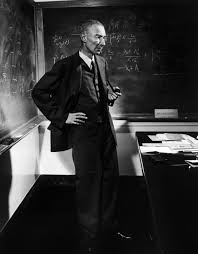
After analyzing these essential portraits, Rombout discusses Karsh’s methodology. Karsh believed that a person’s true self could be disclosed to the camera of a skilled photographer. For Karsh, this involved research before the encounter with the subject, and the encounter itself, which will provide a revelation that, to quote Karsh, “will come in a small fraction of a second with an unconscious gesture, a gleam of the eye, a brief lifting of the mask that all humans wear to conceal their innermost selves from the world.”
Rombout places Karsh in a courtly tradition of portraiture because of his “careful selection of setting, pose, and prop conveying coded signs of social stature, personal comportment, or notable achievement.” Rombout also observes that not only is Karsh a master portraitist but also a remarkably skillful storyteller in his anecdotes about his subjects and that the anecdotes are an essential component of Karsh’s work.
Karsh as an Artist of his Time
Rombout observes that “Karsh aspired to depict his subjects at their best, treating each sitting as an opportunity to create an immortal image.” Thus, “in front of [Karsh’s] camera, politicians appear visionary, war leaders dignified, and business moguls benevolent.”
It is hard to imagine a photographer now undertaking a life project comparable to Karsh’s. Cameras and social media are ubiquitous, so there undoubtedly are in the public domain unflattering images of every celebrity that undercut or contradict the carefully curated heroic images that Karsh aspires to create. Public life has become so deeply polarized that, for any celebrity, it is likely that a large percentage of the population would treat with scorn or ridicule a heroic portrait. How would Karsh compose portraits of Justin Trudeau, Barack Obama, or Donald Trump?
Even if Karsh’s approach is unlikely to be replicated, it is fascinating to study exemplars of it and understand the intellectual worldview and technical methodology he brought to it. Melissa Rombout does a superb job explaining Karsh to the reader. I consider myself very fortunate to have encountered Karsh in my youth and grateful to Rombout for helping me make sense of my experience half a century later.

Leave a Reply